

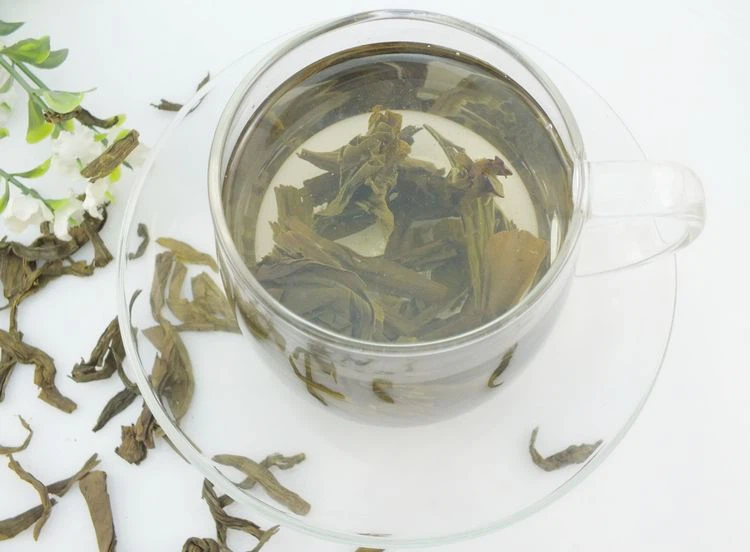
Senna leaf powder is the dried leaf of a leguminous plant, Senna angustifolia or Senna acuminate. Senna has the powerful effects of purging heat and stagnation, promoting water to reduce swelling, antibacterial and anti-inflammatory, antispasmodic and choleretic. However, since the main components of senna are anthraquinone glycosides and flavonoid derivatives, even if senna has such a powerful effect, it cannot be taken for a long time, and certain adverse reactions will occur if it is taken for a long time.
Senna (Senna alexandrina Milll), a small herbaceous shrub of the genus Cassia in the Fabaceae family. [5] Leaf blade ovate-lanceolate to linear-lanceolate, glabrous or almost glabrous. The petals are yellow, obovate, and the lower two petals are larger. Fu fruit oblong, flat, apex apex slightly inconspicuous, hairy when young. The seed coat is brownish green, with a thin linear stalk and verrucous wrinkles. The flowering period is from September to December, and the fruiting period is March of the following year.

Senna is native to tropical offshore or island regions of East Africa, southern Arabia, northwestern and southern India, and Pakistan. Widely grown in India and Pakistan. China Taiwan, Guangxi, Yunnan have introduced cultivation. [6] Senna likes to be dry but not wet, so it should be cultivated in sandy loam with high dryness, good drainage and looseness. Propagation is mainly by seeds.
Leaf senna mainly contains sennosides A, B, C, D, aloe-emodin 8-glucoside (Aloeemodin8-monoglucoside), rhein-8-glucoside (Rhein-8-monoglucoside) and aloe-emodin, Rhein, salicylic acid, palmitic acid, isorhamnetin stearate, kaempferol, phytosterols and their glycosides, etc. In addition, senna still contains rhein-8-diglucoside, rhein anthraquinone-8-glucoside, and primary glycosides.
Senna leaves have the effects of clearing away heat, promoting stagnation, laxative and diuresis. It has a certain antibacterial function, and it can still be used clinically for acute pancreatitis, bacillary dysentery, epidemic hemorrhagic fever, cholecystitis, postpartum regurgitation, etc.
Purgative effect: the medicinal effect of senna leaves is the strongest with dianthrone glycosides such as sennoside A, followed by anthraquinone glycosides. Free anthraquinone may be oxidized through the digestive tract, so the effect is weak; combined glycosides It has a protective effect, and when it reaches the large intestine, it is decomposed into aglycone by bacteria or enzymes, which stimulates the large intestine, increases tension and peristalsis, and reduces water absorption to cause diarrhea.
Anti-fungal: 25% water infusion with test tube method has inhibitory effect on Microsporum audouin and Nocardia star.
Product-related applications: used for heat-constipation constipation, and also for people with habitual constipation and senile constipation. Slimming granules, powders, solid drinks, jellies, etc. that require higher color and taste after dissolution, It is also used in the regulation of blood sugar and blood lipids, antibacterial and anti-inflammatory and other health care fields.
What happens if you drink too much senna?
Senna leaves contain a substance called sennoside, which can inhibit the absorption of water by the large intestine and increase the contents of the intestine sharply. It mainly has certain toxic and side effects on the stomach. Vomiting, black stools, etc., and in severe cases, symptoms such as dizziness, unsteady walking, and facial numbness may also appear.
How much senna should be taken at one time is better?
Generally, 2-6 grams of senna leaves can be added at a time.
Senna leaves are highly irritating and effective after drinking for a few hours, so do not take too much. Generally, it is not more than 2 grams for laxatives, and not more than 6 grams for severe diarrhea. However, in special cases, it can be increased to 10 grams.
Precautions for drinking senna leaves
Senna leaves are cold in nature, bitter in taste, and have a strong purging effect. Therefore, it is not advisable to take senna leaves for deficient diarrhea, long-term constipation, women who are breast-feeding, menstruating, and pregnant women.
It is best not to take senna leaf together with rhubarb and aloe vera, both of which are irritating laxatives, taking them together may cause certain harm to the body.
If you want to know information, contact us at haozebio2014@gmail.com .