

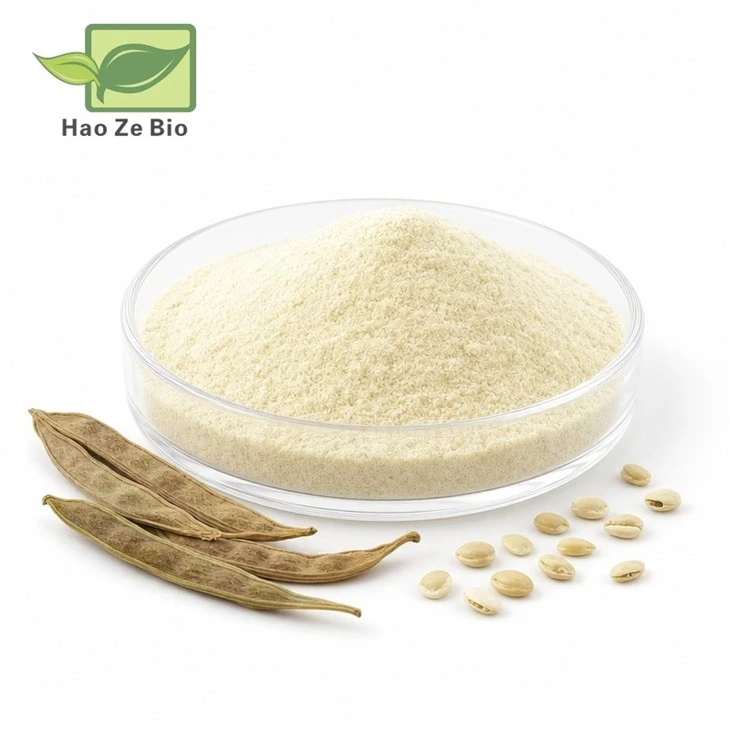
Executive Procurement Summary & Spec Snapshot
Product: Guar Gum Powder (Food Grade / Clean-Label Hydrocolloid E412) | Galactomannan Purity: ≥80.0%
Botanical Source: Cyamopsis tetragonoloba (L.) Taub. Seed Endosperm Splits | CAS Number: 9000-30-0 (EINECS: 232-536-8)
Mesh Granulometry: 200 Mesh Superfine Powder (≥98% pass-through rate) | Dispersibility: Rapid cold-water hydration, lump-free
Commercial Viscosity Tiers: 3,500 cps (Beverage RTD Grade) / 5,000 cps (High-Viscosity Bakery & Sauce Grade, 1% sol, 25°C Brookfield)
Formulation Synergy: Pronounced pseudoplastic rheology; super-linear synergistic viscosity boost when paired with Xanthan Gum (<0.15% combined dosage)
Compliance & Packaging: Non-GMO, Halal, Kosher, Allergen-Free, E412 / FCC / USP Compliant | Standard Packing: 25 kg multi-wall moisture-barrier kraft bags
Material Identity & Superfine Particle Engineering

Cold-Water Swelling Galactomannan for Modern Clean-Label Formulators
Guar Gum Powder (E412) is a premier plant-derived natural hydrocolloid extracted from the refined endosperm splits of the guar plant, Cyamopsis tetragonoloba. Structurally classified as a non-ionic neutral galactomannan polysaccharide (comprising a β-1,4-linked D-mannopyranose backbone with α-1,6-linked D-galactopyranose branches at an approximate 2:1 ratio), guar gum delivers unmatched water-binding capacity across ambient and chilled processing temperatures without requiring thermal activation or enzymatic cooking.
For commercial beverage formulators, commercial bakeries, and sauce manufacturers seeking clean-label alternatives to modified food starches, guar gum provides an economical, non-allergenic, and consumer-friendly hydrocolloid vehicle. Haoze Bio supplies premium-grade Guar Gum Powder produced from strictly non-GMO guar splits, processed via precision air-swept micro-milling to achieve a uniform 200 mesh particle distribution that dissolves smoothly without coarse grit or phase separation.
Overcoming Dispersion Clumping & Fish-Eye Formations in High-Shear Production
A widespread technical bottleneck in industrial hydrocolloid processing is "fish-eye" formation-where rapid surface hydration of coarse powders encapsulates dry, unhydrated cores into insoluble gelatinous lumps. This leads to prolonged mixing tank dwell times, clogged in-line filtration strainers, and inconsistent batch-to-batch rheology.
How Haoze Bio Optimizes Particle Hydrophilic Kinetics: We utilize advanced mechanical air-classification micro-milling that tightens the particle spectrum to 200 mesh (≥98% pass-through rate, D50 ≤45 µm). This controlled particle surface area facilitates rapid ambient wetting when blended with dry carrier ingredients (such as sucrose, maltodextrin, or plant protein isolates) or metered into high-shear powder induction hoppers. Full viscosity build develops within 15–20 minutes at 20°C–25°C, eliminating fish-eyes and reducing blending energy consumption by up to 35%.

Commercial Viscosity Tiers & Specification Selection Matrix
To match precise fluid dynamics across RTD beverages, dairy alternatives, frozen desserts, and commercial baked goods, Haoze Bio standardizes Guar Gum Powder into distinct viscosity tiers. Every lot is verified via 1% Brookfield RVT viscometer testing (25°C, 20 rpm, 2-hour hydration) and accompanied by comprehensive batch-specific documentation.
| Standardized Grade | Viscosity (1% Sol, 25°C) | Particle Mesh | Sensory & Dispersion Dynamics | Recommended Applications |
|---|---|---|---|---|
| Beverage & RTD Grade | 3,000 – 3,800 cps | 200 Mesh (≥98%) | Clean pourability, smooth mouthfeel, neutral flavor, minimal mouth-coating stickiness | Plant-based milks, RTD matcha lattes, fruit smoothies, suspension beverages, instant drink mixes |
| High-Viscosity Functional Grade | 4,800 – 5,500 cps | 200 Mesh (≥98%) | Maximum water immobilization, high yield stress, robust freeze-thaw stability | Gluten-free bakery doughs, ice cream crystal suppression, salad dressings, gravies, dairy spreads |
| Ultra-High Viscosity Grade | ≥ 6,000 cps | 120 – 200 Mesh | Dense gel structure, high shear resistance, long flow profile | Condiments, processed meat binders, industrial pet food gravy systems, personal care gels |
Hydrocolloid Functional Matrix & Synergistic Blending Benchmarks
To support food formulation scientists in selecting the ideal hydrocolloid backbone or engineering dual-gum synergy, the following matrix benchmarks Guar Gum against other primary commercial hydrocolloids across thermal, sensory, and economic operational parameters:
| Functional Parameter | Guar Gum (E412) | Xanthan Gum (E415) | Locust Bean Gum (E410) | Sodium Carboxymethylcellulose (CMC) |
|---|---|---|---|---|
| Polysaccharide Molecular Class | Galactomannan (Man:Gal ~2:1) | Bacterial Heteropolysaccharide | Galactomannan (Man:Gal ~4:1) | Cellulose Ether Derivative |
| Thermal Hydration Requirement | Instant in Cold Water (15°C–25°C) | Cold & Hot Soluble | Requires Heating to ≥80°C for Full Hydration | Cold & Hot Soluble |
| Rheological Behavior | Pseudoplastic (Shear-Thinning) | Extreme Shear-Thinning + High Yield Stress | Pseudoplastic, High Gel Synergy | Pseudoplastic / Thixotropic |
| Electrolyte & pH Compatibility | Non-ionic; Stable across pH 4.0–9.0 & high salt | Anionic; Extremely stable pH 2.0–12.0 | Non-ionic; Stable pH 4.0–10.0 | Anionic; Precipitously loses viscosity below pH 4.0 |
| Synergistic Interaction with Xanthan | Strong Viscosity Multiplication (1:1 or 2:1 ratio) | Acts as Synergistic Partner | Forms Elastic Gel Network (Hot Blending) | Minimal Synergy |
| Clean-Label Consumer Acceptance | High (Plant Seed Origin, Natural Flour) | Moderate (Fermentation Gum) | High (Carob Seed Origin) | Low (Perceived as Synthetic Chemical Additive) |
Commercial Application Formulations & Engineering Solutions
1. Plant-Based Dairy & RTD Beverage Suspension Systems
Engineering Challenge: High-density botanical powders (such as ceremonial matcha, purple sweet potato, or fine plant protein isolates) rapidly precipitate and sediment out of liquid suspension, forming compact bottom sludge in shelf-stable RTD bottles and refrigerated cartons.
Haoze Formulation Solution: Dosing 0.08%–0.15% Beverage Grade Guar Gum establishes a pseudoplastic micro-gel yield stress network. When resting on supermarket shelves, the fluid possesses sufficient apparent viscosity to trap insoluble botanical particles in permanent suspension; upon shaking and drinking, shear-thinning behavior instantly reduces viscosity, providing a smooth, non-slimy, clean-finish sensory experience.
2. Gluten-Free Commercial Bakery & Crumb Softness Retention
Engineering Challenge: Gluten-free dough formulations formulated with rice, cassava, or corn flours lack the cohesive visco-elastic gluten protein matrix, resulting in crumbly texture, poor gas retention during proofing, and accelerated retrogradation (staling).
Haoze Formulation Solution: Incorporating 0.3%–0.6% High-Viscosity Guar Gum (or a 2:1 Guar:Xanthan co-blend) effectively mimics the gas-holding viscoelastic webbing of gluten. It dramatically enhances dough hydration, increases baked loaf specific volume by 15%–22%, and immobilizes moisture to delay amylose retrogradation, extending retail shelf freshness by 3–5 days.
3. Frozen Desserts & Ice Crystal Cryo-Suppression
Engineering Challenge: Thermal temperature cycling during supermarket cold-chain logistics promotes ice crystal Ostwald ripening, transforming creamy ice creams and frozen vegan desserts into coarse, crunchy, unpalatable textures.
Haoze Formulation Solution: Guar gum binds free unbound water molecules within tight hydrogen-bonded hydration cages. Adding 0.12%–0.25% Guar Gum restricts mobile water diffusion toward existing ice nuclei during temperature fluctuations, preserving a silky, scoopable micro-crystalline structure throughout 12+ months of frozen storage.
4. Clean-Label Sauces, Dressings & Emulsion Stabilization
Engineering Challenge: Emulsified dressings and acidified pourable sauces frequently suffer from droplet coalescence, syneresis (serum water separation), and oil ring formation under acidic thermal packaging.
Haoze Formulation Solution: As a neutral non-ionic polymer, guar gum does not precipitate in moderate organic acid environments (pH 4.0–6.0). Adding 0.20%–0.35% Guar Gum immobilizes the aqueous continuous phase, preventing lipid droplet collision and eliminating phase separation without masking delicate aromatic spice notes.
Industrial Processing Pain Points & Haoze Manufacturing Engineering
1. Thermal-Mechanical Dehusking & Physical Deodorization for Neutral Sensory Impact
Standard unrefined agricultural guar flours frequently impart a raw, beany, grassy off-note (caused by residual germ lipids, lipoxygenase enzymes, and volatile hexanal compounds). When dosed into delicate white milk bases, vanilla ice creams, or matcha lattes, this grassy off-flavor conflicts with target sensory profiles.
Haoze Bio Engineering Process: We implement dry thermo-mechanical dehusking that strips away 100% of the outer fibrous hull and inner embryo germ, isolating only pure, translucent endosperm splits. Subsequent controlled flash-conditioning deactivates residual lipoxygenase without degrading polysaccharide molecular weight, ensuring an ultra-neutral sensory profile that allows your beverage flavorings and fruit aromatics to shine through unaltered.
2. Super-Linear Viscosity Synergy: Xanthan-Guar Co-Blending Economy
For growing B2B brands managing ingredient cost-in-use, relying on single hydrocolloids at high addition rates often inflates raw material costs and can introduce unwanted slimy or gummy textural defects.
Synergy Mechanism & Recipe Optimization: When flexible neutral guar galactomannan chains interact with the rigid, five-fold helical cellulosic backbone of xanthan gum, an intermolecular lock occurs between smooth mannan segments and xanthan side-chains. A 1:1 or 2:1 co-blend of Guar Gum and Xanthan Gum generates a synergistic viscosity multiplier up to 1.8x–2.4x higher than either gum alone. Formulators can reduce overall hydrocolloid dosage to under 0.15% total weight, slashing ingredient costs by 20%–30% while achieving superior long-term emulsion stability.
Batch Quality Assurance & Reference COA Technical Parameters
Every export consignment of Haoze Bio Guar Gum Powder is validated against international pharmacopeia (USP/NF, FCC) and food additive (EU E412) benchmarks. Below are standard representative release parameters. A lot-specific Certificate of Analysis is issued with every commercial shipment.
| Analytical Parameter | Standard Specification Benchmark | Typical Batch Result | Analytical Method |
|---|---|---|---|
| Appearance & Color | White to light yellowish-white fine powder | Conforms (Off-white fine powder) | Visual Inspection |
| Odor & Sensory Profile | Neutral, practically odorless, no beany off-notes | Conforms (Neutral clean sensory) | Organoleptic Panel |
| Galactomannan Polysaccharide Content | ≥ 80.0% (dry basis) | 82.6% | USP / FCC Gravimetric Calculation |
| Viscosity (1% Sol, 25°C, 2h) - 3500 Grade | 3,000 – 3,800 cps | 3,520 cps | Brookfield RVT (Spindle 4, 20 rpm) |
| Viscosity (1% Sol, 25°C, 2h) - 5000 Grade | 4,800 – 5,500 cps | 5,180 cps | Brookfield RVT (Spindle 4, 20 rpm) |
| Particle Granulometry (200 Mesh) | ≥ 98.0% through 200 mesh (74 µm) | 99.1% Pass | Standard Air-Jet Sieve Analysis |
| Loss on Drying (Moisture) | ≤ 12.0% | 10.2% | USP 105°C to Constant Weight |
| Total Ash | ≤ 1.5% | 0.85% | USP 600°C Muffle Incineration |
| Acid-Insoluble Matter | ≤ 7.0% | 4.1% | FCC / E412 Reference Method |
| Protein (N × 6.25) | ≤ 8.0% | 5.2% | Kjeldahl Method |
| Lead (Pb) | ≤ 2.0 ppm | < 0.2 ppm | ICP-MS |
| Arsenic (As) | ≤ 1.0 ppm | < 0.1 ppm | ICP-MS |
| Cadmium (Cd) | ≤ 1.0 ppm | < 0.05 ppm | ICP-MS |
| Mercury (Hg) | ≤ 0.1 ppm | < 0.01 ppm | ICP-MS |
| Total Plate Count | ≤ 5,000 cfu/g | < 600 cfu/g | FDA BAM Ch. 3 |
| Yeast & Mold | ≤ 500 cfu/g | < 50 cfu/g | FDA BAM Ch. 18 |
| Escherichia coli | Negative in 10g | Negative | FDA BAM Ch. 4 |
| Salmonella spp. | Negative in 25g | Negative | FDA BAM Ch. 5 |
Enterprise Infrastructure & Regulatory Quality Assurance

Haoze Bio operates modern GMP-standard extraction and clean hydrocolloid milling lines equipped with automated pneumatic conveying, enclosed vibrating sieving screens, and continuous rare-earth magnetic metal separators. Dust-controlled cleanrooms ensure zero foreign matter contamination and preserve strict food-grade microbiological compliance throughout bulk packing.
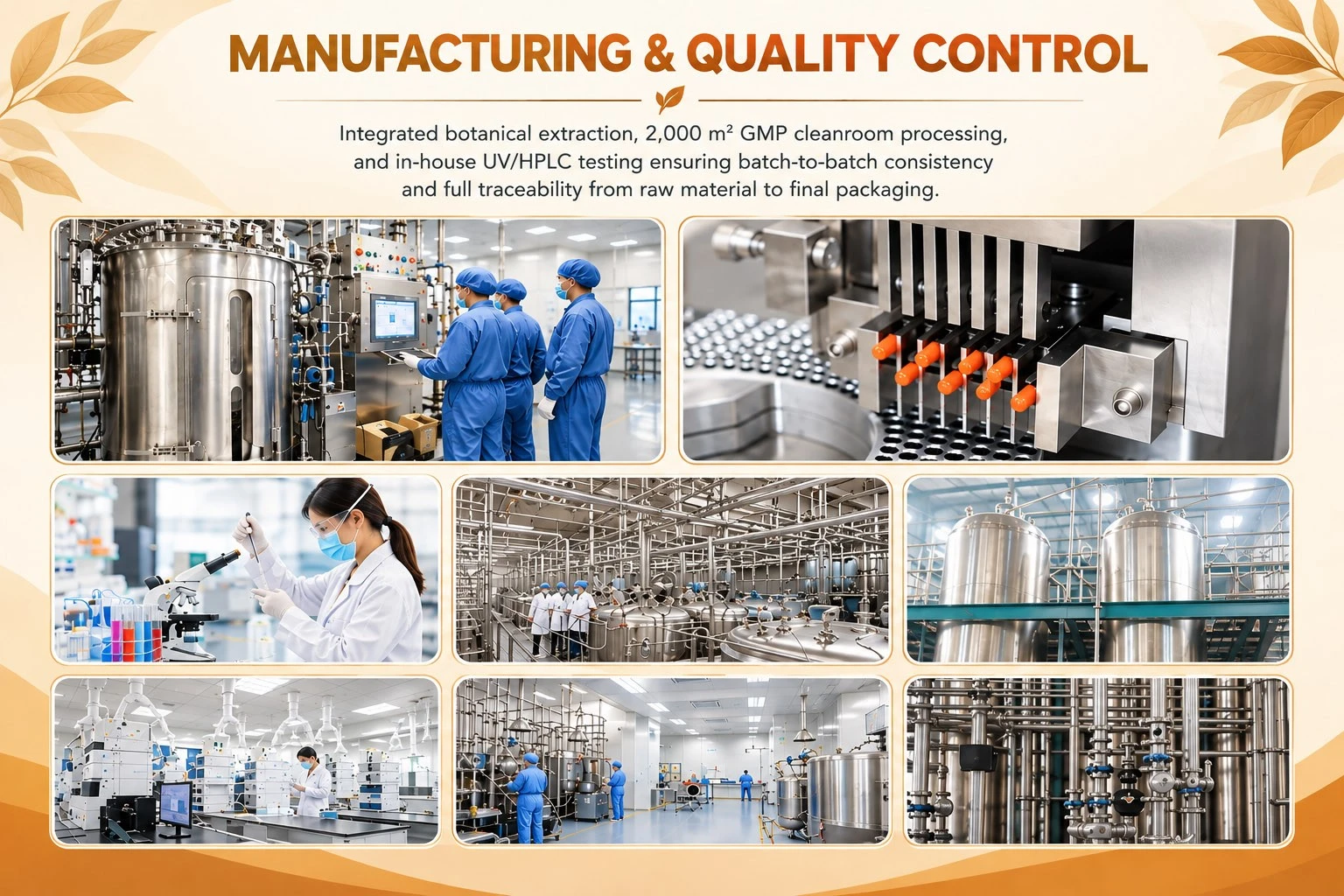
Our centralized QC laboratory conducts rigorous three-stage raw split, in-process slurry, and finished lot testing. Every commercial batch undergoes calibrated Brookfield RVT viscometer validation, laser diffraction particle size analysis, loss-on-drying moisture determination, and ICP-MS heavy metal quantitation. Full archival retain samples are safeguarded under controlled temperature conditions throughout verified product shelf life.
Commercial Flexibility: OEM Blending & Pilot-to-Scale Support

Bridging the gap between rigid multinational chemical conglomerates and high-markup regional brokers, Haoze Bio provides agile support tailored specifically for medium-sized food and beverage enterprises. We support pilot-scale R&D trials (25 kg drum batches) up to multi-pallet 1,000 kg production runs, custom hydrocolloid dry-blending (e.g., pre-blended Guar/Xanthan/Tara stabilizing systems), and flexible private-label contract packaging.
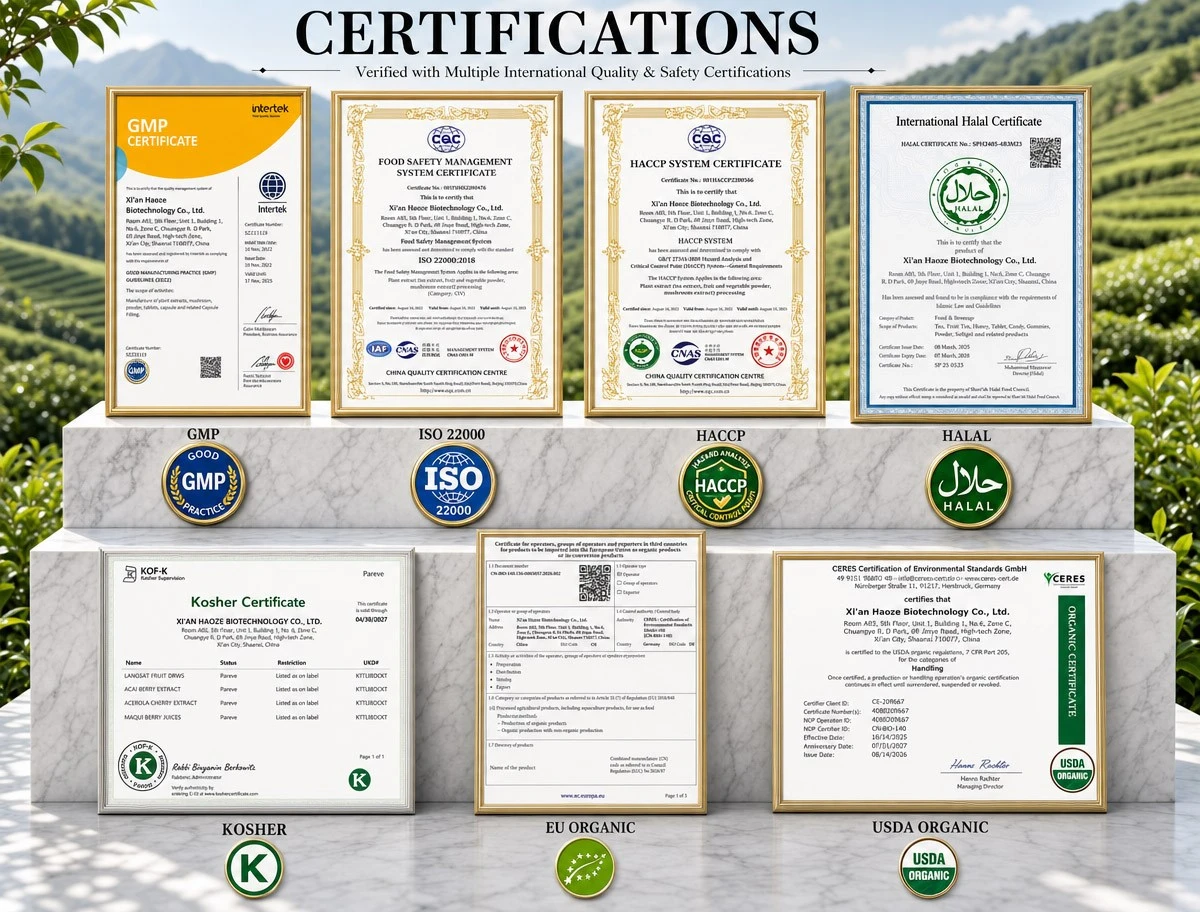
Our manufacturing ecosystem adheres strictly to ISO 22000, HACCP, cGMP, Halal, and Kosher regulatory benchmarks. All export consignments comply fully with US FDA 21 CFR §184.1339 and EU Regulation (EU) No 231/2012 food additive purity criteria, providing your QA and regulatory audit teams with effortless cross-border approval.
Moisture-Barrier Packaging & Agile Global Shipping
Because superfine 200 mesh hydrocolloids exhibit strong natural hygroscopicity, improper storage or transit barrier failure can induce atmospheric moisture absorption, premature surface caking, and viscosity degradation. Haoze Bio packages bulk Guar Gum Powder in heavy-duty food-grade polyethylene inner liners hermetically heat-sealed inside multi-wall polyethylene-laminated kraft paper bags or fiber drums (25 kg net weight).
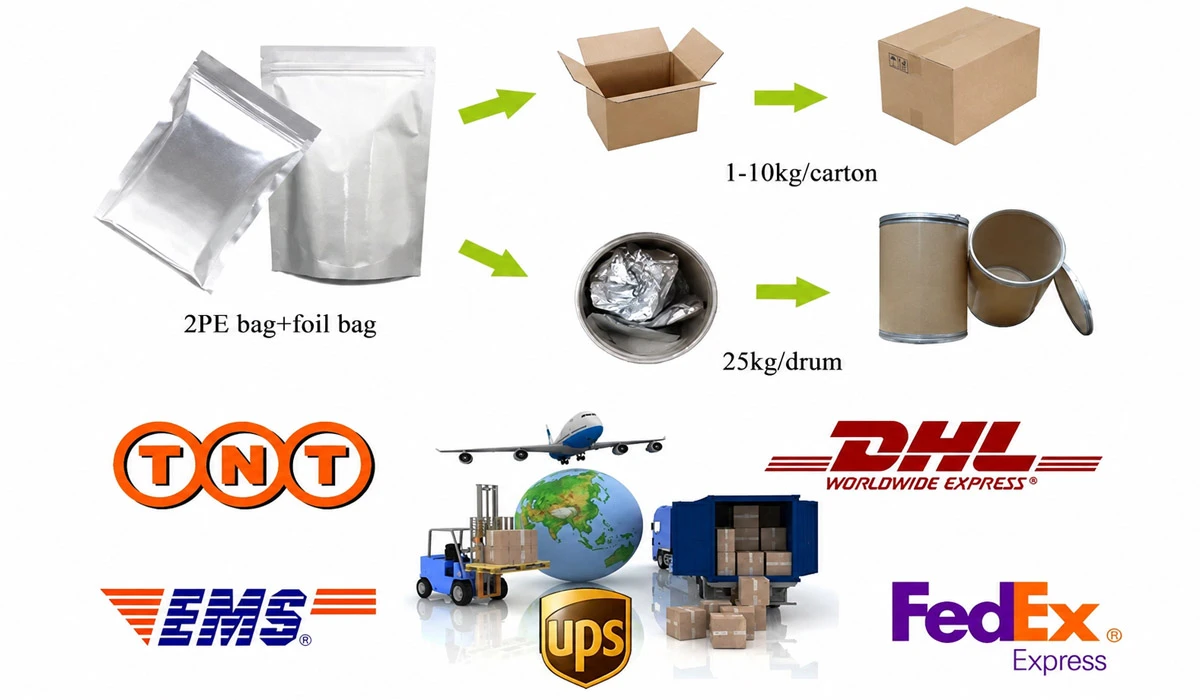
We offer flexible, cost-optimized transport solutions adapted to growing commercial order volumes: expedited door-to-door air freight for urgent R&D sampling or trial pilot runs (3–7 business days dispatch), alongside full-container (FCL) and consolidated (LCL) palletized ocean freight. Every pallet is stretch-wrapped with corner-board protection and accompanied by complete export documentation (Bill of Lading, Certificate of Origin, Phytosanitary Certificate, and packing manifests).
Frequently Asked Questions (Buyer Procurement & Formulation FAQ)
Q1: How do I disperse 200 mesh guar gum powder without clumping or forming fish-eyes in commercial production?
A: For optimal, lump-free hydration, we recommend dry-blending Guar Gum Powder with 3 to 5 parts of dry recipe ingredients (such as sugar, flour, starch, or protein powder) before introducing it into liquids under moderate agitation. Alternatively, for liquid-only systems, meter the powder through a high-shear powder induction funnel (such as a Tri-Blender) or pre-disperse it into a non-solvent phase like vegetable oil or liquid sugar syrup prior to water contact. Full viscosity develops within 15–20 minutes at 20°C–25°C.
Q2: What is the primary functional difference between 3,500 cps Beverage Grade and 5,000 cps High-Viscosity Grade?
A: The difference lies in galactomannan polymer chain length and hydraulic resistance. Our 3,500 cps Beverage Grade provides smooth, clean-pouring body with minimal mouth-coating stickiness, making it ideal for suspending fine particles in plant-based milks, RTD teas, and fruit smoothies. Our 5,000 cps Grade provides maximum water immobilization, dough elasticity, and freeze-thaw crystal suppression, engineered specifically for gluten-free baked breads, ice creams, thick dressings, and sauces.
Q3: Does your guar gum powder impart any grassy, beany, or agricultural off-flavor to delicate food bases?
A: No. Haoze Bio implements a proprietary thermal-mechanical dehusking process that strips away 100% of the seed embryo germ, where off-flavor-generating lipoxygenase enzymes and lipid oxidation compounds reside. Combined with flash de-aeration, our powder exhibits an exceptionally neutral organoleptic profile that will not mask delicate floral notes, vanilla, or subtle dairy aromatics even at usage levels up to 0.5%.
Q4: How does Guar Gum interact synergistically with Xanthan Gum to reduce formulation cost?
A: Guar gum galactomannan chains interlock with the rigid helical cellulosic backbone of xanthan gum at room temperature. A co-blend of Guar Gum and Xanthan Gum (typically in a 1:1 or 2:1 ratio) generates a super-linear viscosity multiplication effect up to 1.8x–2.4x higher than either gum alone. This synergy allows formulators to reduce overall hydrocolloid addition rates to less than 0.15% total formula weight, significantly lowering unit production costs while enhancing shelf-life emulsion stability.
Q5: What are your minimum commercial order quantities and trial pilot batch sizes for medium-sized enterprises?
A: We maintain a highly flexible supply structure designed specifically for agile B2B brands. We provide complimentary 100g–500g analytical evaluation samples for benchtop R&D formulation trials, support single-drum 25 kg pilot validation orders for commercial test runs, and scale seamlessly to palletized 500 kg–1,000 kg delivery runs with guaranteed batch-to-batch viscosity consistency and full regulatory documentation.
Request Bulk Guar Gum Powder Samples, Technical COA & Wholesale Pricing
Partner directly with Haoze Bio for agile hydrocolloid supply, custom viscosity calibration, and clean-label texture optimization. Whether you require free lab evaluation samples (100g–500g), custom guar-xanthan premixing, or pilot drum quantities (25 kg), our technical support and commercial team responds with comprehensive documentation within 24 business hours.
Direct Inquiry Email: info@haoze-bio.com | Xi'an Haoze Biotechnology Co., Ltd.