


Products Description
Ashwagandha Root Powder covers two primary commercial ingredient formats derived from authentic Withania somnifera (L.) Dunal: mechanically milled whole root powder and standardized root extract powder. Each format serves distinct technical objectives across modern dietary supplements, functional foods, and adaptogenic beverage systems. In global procurement, specifying the correct botanical part, validated analytical method, and physical dispersion behavior is essential to protect product efficacy and regulatory compliance. Haoze Bio provides traceable, pharmacopeia-aligned Ashwagandha root raw materials for commercial formulation evaluation.

Product at a Glance
| Botanical Name | Withania somnifera (L.) Dunal |
| Verified Plant Part | 100% Dried Root (Exclusively Root Sourced; Leaf-Free) |
| Available Formats | Whole Root Powder & Standardized Root Extracts (2.5% to 5.0%) |
| Active Marker Compound | Total Withanolides Assayed by Validated HPLC Method |
| Physical Appearance | Light Tan to Buff-Yellow Fine Powder (80–100 Mesh) |
| Formulation Suitability | Hard Capsules, Tablets, Adaptogenic Drink Mixes, Functional Gummies |
| Quality Assurance | Controlled Low Withaferin A, Non-GMO, Heavy Metals via ICP-MS |
Why Does 100% Root Source Matter in Ashwagandha?
Authentic Ayurvedic pharmacopeial tradition and modern compendial monographs (including the United States Pharmacopeia USP and European Pharmacopoeia EP) specify that medicinal Ashwagandha ingredients must be prepared exclusively from the dried roots of Withania somnifera. The botanical distinction between root tissue and aerial leaf tissue directly affects biological safety, chemical profile, and commercial legal compliance in global markets.
Ashwagandha leaves naturally synthesize high concentrations of Withaferin A, an oxygenated steroidal lactone that exhibits potent in vitro cytotoxicity. While Withaferin A is studied in oncology research, excessive dietary ingestion presents documented hepatotoxicity and cytotoxicity concerns in consumer wellness formulations. In genuine root tissue, beneficial Withanolide A and withanosides predominate, delivering adaptogenic neurological and endocrine support without aggressive cytotoxic risk. Low-cost market materials blended with aerial leaf parts or stems create serious regulatory liability, risk customs detention, and jeopardize brand credibility. Sourcing requires unambiguous microscopic botanical identity verification and High-Performance Thin-Layer Chromatography (HPTLC) fingerprinting.
Whole Root Powder vs. Standardized Extract: Which Grade Matches Your Formula?
Whole root powder and standardized root extract powder are distinct engineering materials designed for different dosage matrices. Whole root powder preserves the intact matrix of insoluble dietary fiber, complex carbohydrates, and native steroidal lactones (~0.2%–0.5% withanolides). In contrast, standardized extracts selectively isolate and concentrate bioactive withanolides to defined concentrations (typically 2.5% to 5.0% by HPLC) while stripping out fibrous cellular bulk, facilitating precise clinical dosing in compact delivery systems.
| Parameter & Specification | Ashwagandha Whole Root Powder | Standardized Root Extract 2.5% | Standardized Root Extract 5.0% |
|---|---|---|---|
| Processing Method | Low-temperature drying & ultra-fine mechanical milling | Aqueous or hydroalcoholic extraction; spray-dried | Hydroalcoholic fractionation & resin refinement |
| Bioactive Concentration | Native full-spectrum (~0.2%–0.5% Withanolides) | ≥2.5% Withanolides (HPLC assayed) | ≥5.0% Withanolides (HPLC assayed) |
| Dispersion & Water Behavior | Forms cloudy suspension; natural fibrous sediment | Disperses smoothly in warm water; minimal sediment | Highly concentrated micro-dispersion in liquids |
| Typical Daily Sizing | 1,000 mg to 3,000 mg per serving | 400 mg to 600 mg per serving | 250 mg to 300 mg per serving |
| Primary Application Fit | Traditional capsules, tablets, tea cuts, baked bars | Adaptogenic coffee, moon milk, drink blends | High-potency sleep capsules, functional gummies |
| Formulation Advantage | 100% clean-label whole root; cost-effective base | Gentle flavor profile; rapid beverage dispersion | Small dose footprint; leaves room for co-actives |
Demystifying UV vs. HPLC Analytical Methods: Buyers must recognize that spectrophotometric UV testing non-specifically measures overall absorbance at ~225 nm across all conjugated chromophores. As a result, UV assays routinely report inflated figures (e.g., claiming 5% to 10% withanolides) by measuring non-active sterols, polyphenols, and plant chlorophylls. High-Performance Liquid Chromatography (HPLC) according to USP <621> isolates individual peak areas for Withanolide A, Withanoside IV, and Withaferin A. Comparing raw material costs requires alignment on the exact HPLC testing protocol.
Overcoming Dispersion and Bitterness in Food Systems
In Sanskrit, Ashwagandha translates to "smell of the horse," reflecting the distinct earthy, pungent, and astringent sensory profile of fresh roots. In finished food matrices, formulators encounter two primary engineering challenges: physical sedimentation in liquids and bitter taste perception on the palate.
Sedimentation Control: Whole root powder carries insoluble plant cellulose and starches that naturally settle out within minutes in static beverages. For ready-to-mix powders, dry pre-blending with natural hydrocolloids (such as acacia fiber or xanthan gum) enhances suspension stability. For ready-to-drink formulations, water-soluble extract grades must be utilized rather than whole milled roots.
Bitterness Masking in Functional Gummies & Beverages: The characteristic bitterness originates from the steroidal lactone skeleton. In gummy candy bases (pectin or gelatin), incorporating a dual acid buffer (0.8%–1.2% citric acid and malic acid) alongside dark berry profiles (blackberry, blackcurrant, or elderberry) effectively blocks bitter taste receptors. In adaptogenic coffee, matcha, and oat milk lattes, natural dairy fats or plant lipids physically coat withanolide molecules, converting harsh astringency into a pleasant nutty note.

Navigating Global Regulatory Thresholds and Safety Release
Regulatory frameworks governing Ashwagandha vary significantly across international jurisdictions. In the United States, Withania somnifera root is recognized under DSHEA as a dietary supplement ingredient, requiring cGMP compliance and California Proposition 65 heavy metal verification. In the European Union, market requirements differ by member state: for instance, Polish sanitary authorities (GIS) maintain a maximum recommended intake of 3 grams of raw root or 10 mg of withanolides daily, while Danish authorities (DTU) have placed specific restrictions on food supplements. Transparent manufacturing documentation and chemical characterization are critical to ensure smooth regulatory clearance.
| Analysis / Parameter | Raw Whole Root Powder Baseline | Standardized Root Extract Baseline | Analytical Test Method |
|---|---|---|---|
| Botanical Identity | Matches authentic W. somnifera root | Matches authentic root chromatogram | HPTLC / USP <203> |
| Assay (Withanolides) | Full-spectrum native (~0.2%–0.5%) | ≥2.5% or ≥5.0% by HPLC | USP <621> HPLC |
| Cytotoxic Marker (Withaferin A) | Natural trace level | Strictly limited threshold | HPLC Quantitative Assay |
| Physical Particle Size | ≥95% pass 80–100 Mesh | ≥98% pass 80–100 Mesh | USP <786> Sieve Analysis |
| Loss on Drying (Moisture) | ≤8.0% | ≤5.0% | USP <731> (105°C) |
| Total Ash Content | ≤8.0% | ≤5.0% | USP <561> |
| Lead (Pb) | <1.0 ppm (Prop 65 Compliant) | <1.0 ppm | ICP-MS |
| Arsenic (As) | <1.0 ppm | <1.0 ppm | ICP-MS |
| Cadmium (Cd) | <1.0 ppm | <0.5 ppm | ICP-MS |
| Mercury (Hg) | <0.1 ppm | <0.1 ppm | ICP-MS |
| Pesticide Residues | Meets USP <561> & EP Standards | Non-detectable; EP compliant | GC-MS/MS & LC-MS/MS |
| Total Plate Count (TPC) | <10,000 CFU/g | <1,000 CFU/g | AOAC / USP <2021> |
| Yeast & Mold | <100 CFU/g | <100 CFU/g | AOAC / USP <2021> |
| E. Coli & Salmonella | Negative / 10g | Negative / 10g | USP <2022> |
Application Matrix Across Dosage Formats
Selecting the optimal Ashwagandha grade depends on manufacturing equipment constraints, carrier requirements, sensory thresholds, and finished packaging geometry.
| Target Dosage Format | Recommended Format | Critical Processing Parameter | Formulation Engineering Guidance |
|---|---|---|---|
| Hard Two-Piece Capsules | Whole Root Powder or 5.0% Extract | Bulk density 0.45–0.60 g/mL; angle of repose <35° | Ensure consistent powder flow on high-speed encapsulators. For 5% extract, utilize clean microcrystalline cellulose as a running excipient. |
| Direct-Compress Tablets | Whole Root Powder (80 Mesh) | Binding compressibility & friability <1.0% | Whole root fibers offer natural tableting binding characteristics; combine with silica glidants to maintain high tablet hardness. |
| Functional Pectin Gummies | Standardized Extract (2.5% to 5.0%) | Thermal degradation boundary (≤85°C) | Add extract during the post-cooking acid/flavor dosing stage to avoid extended thermal exposure. Buffer to pH 3.2–3.6 to preserve gelling. |
| Dry Drink Mixes & Coffee | Standardized Extract 2.5% (Water-Dispersible) | Instant wetting & dispersion rate | Pre-blend with instant coffee, cocoa, or plant creamer powders. Lipids in creamer bases naturally mitigate herbal bitterness. |
Integrated Manufacturing and Clean Milling Capacity
Haoze Bio operates modern botanical processing infrastructure designed to handle root milling, water/solvent extraction, and cleanroom packaging under strict cGMP principles. Processing raw Withania somnifera roots requires specialized heavy-duty milling lines to pulverize tough lignified root cores without generating excessive frictional heat that could degrade heat-sensitive withanolides. Our temperature-regulated air-swept milling systems maintain fine mesh distribution (80–100 mesh) while preserving natural phytochemistry.

Our extraction workshop features closed stainless-steel countercurrent extraction tanks, falling film evaporators, and sanitary spray-drying towers. Controlled atmospheric extraction prevents thermal breakdown, ensuring consistent bulk extract powder output for commercial supplement manufacturing.
R&D, HPLC Chromatography and Heavy Metal Quality Control
Every commercial production run of Ashwagandha Root Powder undergoes multi-stage laboratory validation before release. Incoming raw dried roots are screened for authentic botanical morphology, foreign matter, and moisture. In-process controls monitor mesh size and extraction yields. Finished lots undergo comprehensive identity, purity, and safety assays in our testing center.
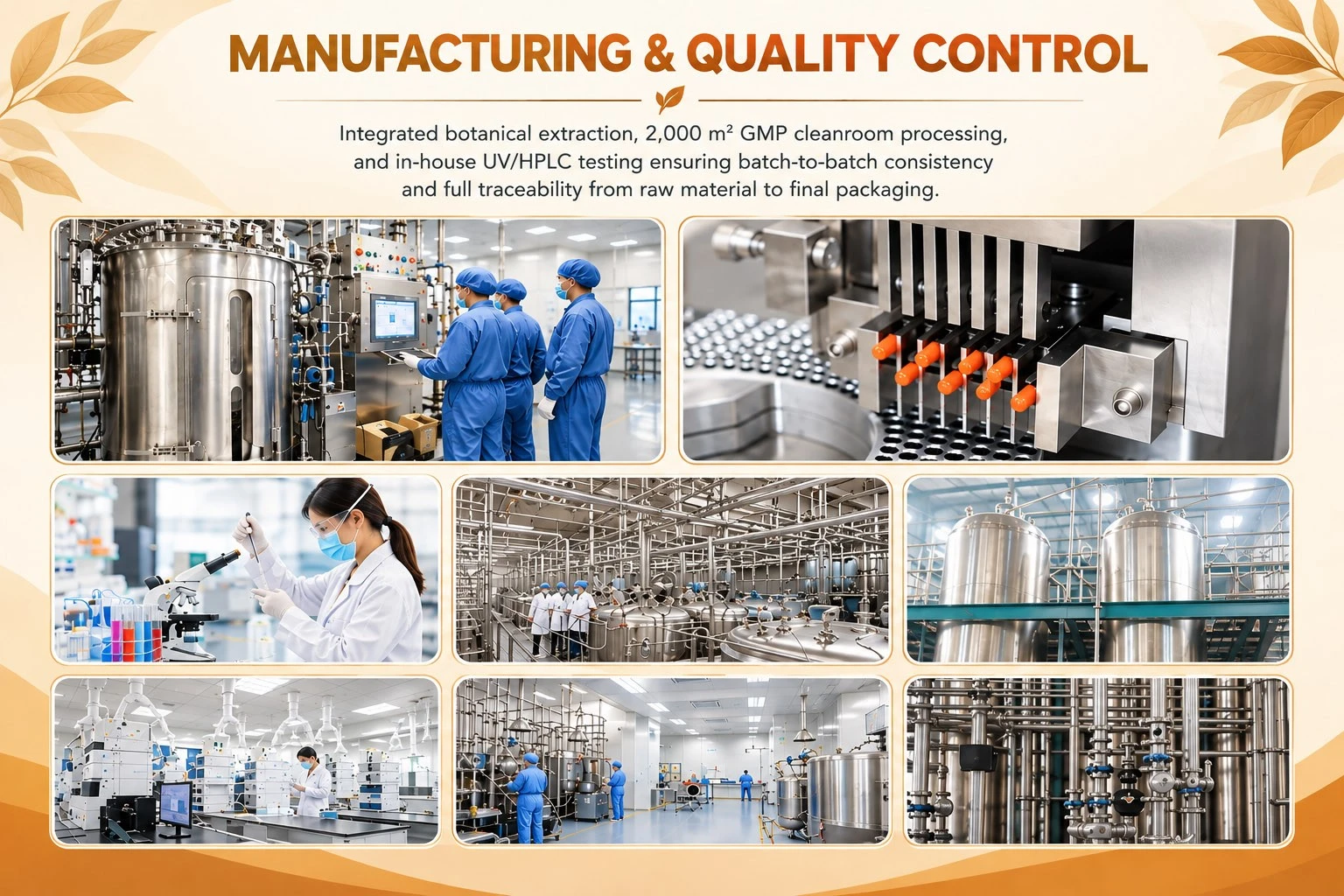
Our laboratory utilizes Agilent High-Performance Liquid Chromatography (HPLC) units for precise withanolide quantification and Withaferin A threshold monitoring. Inductively Coupled Plasma Mass Spectrometry (ICP-MS) verifies compliance with stringent global heavy metal standards (Pb <1.0 ppm, As <1.0 ppm, Cd <0.5 ppm, Hg <0.1 ppm). Finished batch documentation accompanies every shipment to ensure immediate QA clearance.
OEM and ODM Format Customization
Beyond bulk raw materials, Haoze Bio provides contract manufacturing and formulation customization for brand partners developing turnkey adaptogenic products. Our technical team works alongside client R&D groups to optimize ingredient synergy, excipient selection, and packaging engineering.

Customization capabilities include custom particle sizing (from 60 mesh tea cuts up to 200 mesh superfine powders), standardized withanolide blending, clean-label excipient substitution (organic acacia fiber or rice hull concentrate), functional pre-mix formulation (Ashwagandha combined with L-Theanine, Magnesium, or Lion's Mane), and contract encapsulation in vegetarian HPMC capsules with private label bottling or sachet packaging.
Certification and Global Compliance Verification
Xi'an Haoze Biotechnology maintains international quality, food safety, and religious compliance certifications to support seamless regulatory import across North America, the European Union, Southeast Asia, and the Middle East.
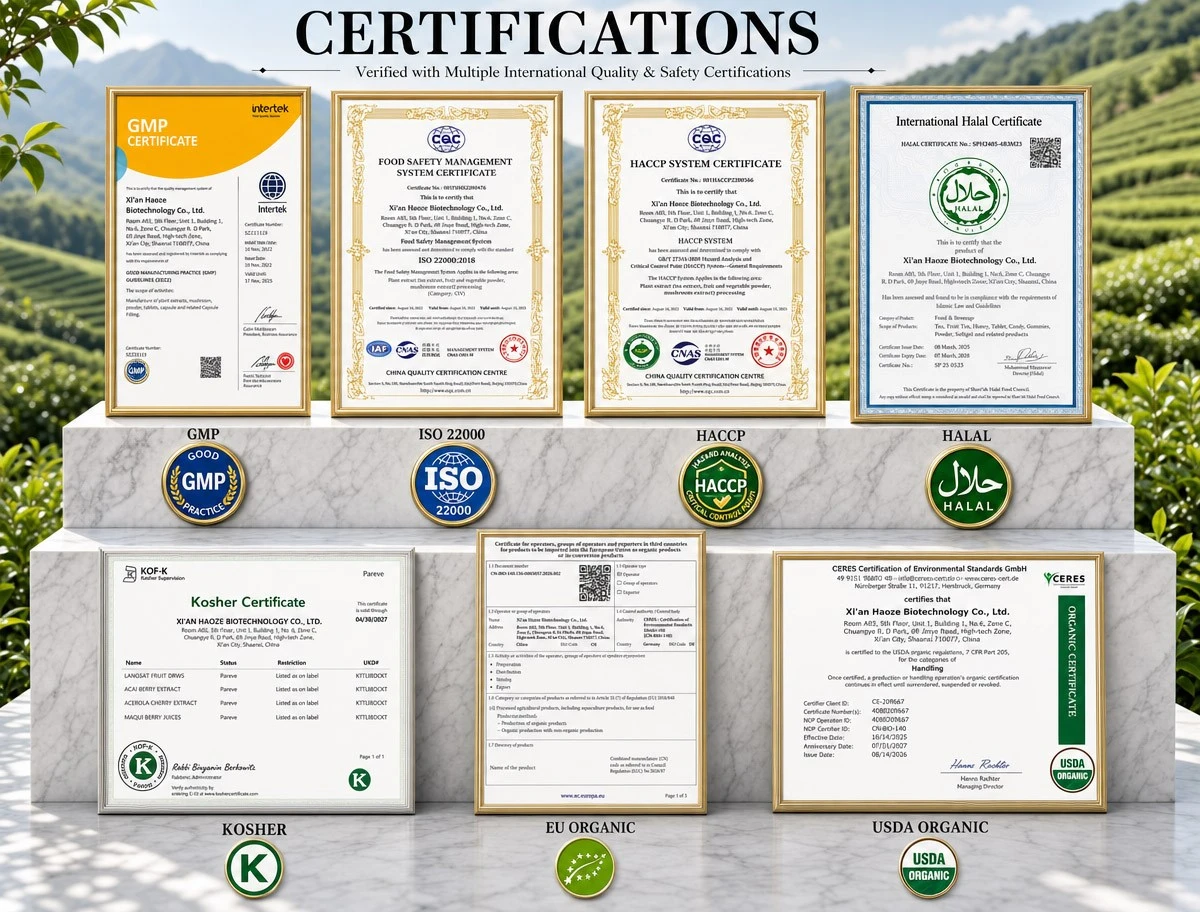
Our facility operates under ISO 9001:2015 Quality Management Systems, ISO 22000 Food Safety Management, and HACCP principles. All products are eligible for Kosher and Halal certification. In addition, our documentation team prepares non-irradiation statements, ETO-free guarantees, non-GMO affidavits, and technical registration dossiers tailored to destination customs requirements.
Packaging, Moisture Protection and Export Logistics
Ashwagandha extract powders demonstrate significant hygroscopicity at relative humidity levels above 60%. Improper moisture protection can lead to powder caking, particle hardening, and active degradation during marine or air transit. Haoze Bio implements multi-barrier packaging standards to ensure powder integrity from our factory floor to your warehouse.
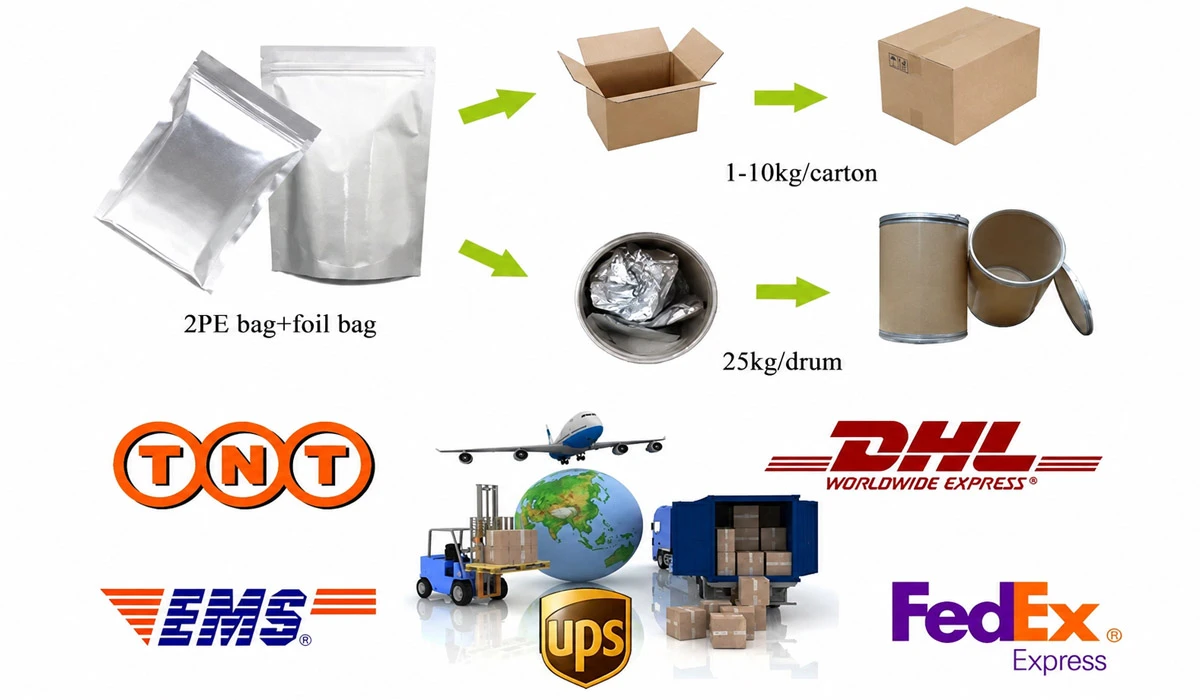
Standard commercial packaging consists of food-grade double polyethylene inner heat-sealed liners enclosed within 25 kg fiber drums with tamper-evident metal locking rings. For sample evaluations and trial runs, 1 kg heat-sealed multi-layer aluminum foil barrier pouches are provided. Shipments are shrink-wrapped on sanitized wooden pallets for international freight dispatch via air cargo, express courier, or full container load (FCL/LCL) sea shipping.
Frequently Asked Questions
Q1: What is the main difference between Ashwagandha whole root powder and extract powder?
A: Whole root powder is produced by cleaning, drying, and finely milling 100% dried Withania somnifera roots without chemical solvent extraction. It preserves the complete botanical matrix, including natural dietary fibers, starches, and native withanolides (~0.2%–0.5%), and is ideal for traditional capsules, tablets, and clean-label bakery premixes. Standardized extract powder undergoes aqueous or hydroalcoholic extraction to concentrate bioactive withanolides to targeted levels (2.5% to 5.0% by HPLC) while removing insoluble fibrous mass, providing superior dispersion for functional beverages, moon milk blends, and modern nutraceutical gummies.
Q2: Why is HPLC testing essential compared to UV-Vis for Withanolides?
A: High-Performance Liquid Chromatography (HPLC) separates and quantifies individual steroidal lactones such as Withanolide A, Withanoside IV, and Withaferin A against verified reference standards. In contrast, non-specific UV-Vis spectrophotometry measures broad ultraviolet absorption across all conjugated double bonds, easily counting non-active plant pigments, degraded polyphenols, or adulterated leaf sterols as withanolides. Sourcing with verified HPLC ensures accurate active dosing, prevents commercial overpayment for inflated assay claims, and guarantees batch-to-batch therapeutic consistency.
Q3: Can Ashwagandha powder dissolve completely in clear RTD beverages?
A: Whole root powder contains over 60% insoluble fiber and starches, meaning it forms a cloudy dispersion and will naturally precipitate if left standing in static liquids; it should never be specified for crystal-clear beverages. Standardized water-soluble extract powders disperse rapidly in warm water to form an even, low-sediment colloidal solution suitable for functional shots, adaptogenic coffee, and cloudy RTD beverages. For completely transparent beverages, formulation engineers must evaluate specialized de-flavored, de-fatted, and ultra-filtered liquid extract preparations.
Q4: Is Withaferin A controlled in your Ashwagandha root extract?
A: Yes. Withaferin A is a steroidal lactone abundant in Ashwagandha leaves but present only in trace amounts in genuine roots. Because excessive Withaferin A is linked to cytotoxic and hepatotoxic concerns in regulatory evaluations, genuine root sourcing is the primary safety filter. Haoze Bio requires exclusive use of 100% dried roots and monitors the withanolide profile via HPLC to ensure that beneficial Withanolide A predominates while Withaferin A remains within strictly controlled, safe natural threshold levels.
Q5: Which regulatory documents should bulk buyers request before purchasing?
A: Bulk buyers and QA teams should request a lot-specific Certificate of Analysis (COA) specifying botanical identity, used plant part (100% root), HPLC withanolide assay, heavy metals (Pb, As, Cd, Hg via ICP-MS), residual solvents, pesticide residues (USP <561>), and microbiological counts. In addition, buyers should obtain Technical Data Sheets (TDS), Safety Data Sheets (SDS), Non-GMO statements, Allergen declarations, and irradiation/ETO-free certificates to support local market health authority registrations.
Discuss Your Ashwagandha Formulation with Haoze Bio
Whether you are formulating clean-label capsules, developing an adaptogenic beverage line, or scaling an existing herbal gummy product, Haoze Bio provides dedicated technical consultation, customized specification matching, and rapid laboratory sample dispatch. Specify your target grade (whole root powder, 2.5% extract, or 5% extract), desired delivery format, and regulatory market to receive comprehensive technical dossiers and commercial quotations.
Inquiry & Technical Support Contact: info@haoze-bio.com