


Products Description
Ganoderma Lucidum Extract is a mushroom ingredient made from the fruiting body of Reishi, commonly identified in commercial literature as Ganoderma lucidum. Buyers generally compare hot-water extracts, which focus on water-extractable constituents, with dual extracts that add an alcohol-extraction step to include a broader constituent profile. The correct choice depends on the requested marker panel, sensory target and finished-product matrix. Haoze Bio can discuss grade-specific documentation and sample evaluation for bulk sourcing projects.

Product at a Glance
| Product | Ganoderma Lucidum Extract / Reishi Extract |
| Source | Ganoderma fruiting body; confirm species and part on the selected grade |
| Format Options | Hot-water extract or water-and-alcohol dual extract |
| Marker Panel | Polysaccharides, beta-glucans and, where specified, triterpenoids |
| Formulation Fit | Capsules, powder blends and selected beverage applications |
| Buyer Verification | Grade specification, stated assay methods and lot-specific COA |
Reishi Water Extract and Dual Extract: What Changes?
A hot-water extract and a dual extract are not interchangeable specifications. Hot-water extraction is suited to water-extractable constituents, including polysaccharides. A dual-extraction process adds an alcohol-soluble fraction, commonly used to include triterpenoids alongside polysaccharides. Actual recovery varies with raw material and process design; "dual extract" alone does not guarantee a particular percentage, ratio or marker level.
| Buyer comparison | Hot-water extract | Water-and-alcohol dual extract |
|---|---|---|
| Process intent | Recover water-extractable material | Combine water extraction with an alcohol-soluble fraction |
| Marker discussion | Polysaccharide and beta-glucan assays, as defined by the grade | Polysaccharide/beta-glucan plus stated triterpenoid assay, if specified |
| Typical buyer priority | Water-based formulation and sensory screening | Broader constituent profile for capsules or blends |
| Key validation | Method, units, dispersibility and finished-matrix trial | Extraction details, marker methods, residual-solvent controls and finished-matrix trial |
| Do not assume | That total polysaccharides equal beta-glucans | That a ratio or "full spectrum" label proves a marker level |
Marker Testing and Raw-Material Verification
Polysaccharides, beta-glucans and triterpenoids describe different analytical targets. A total-polysaccharide result should not be presented as a beta-glucan result, and a total-triterpenoid colorimetric assay is not automatically equivalent to quantifying individual ganoderic acids. Buyers should request the method, reference standard, sample basis and units with each result.
| Specification field | What to request | Why it matters |
|---|---|---|
| Botanical identity and part | Species, fruiting body or other part, and identity method | Separates fruiting-body extract from spores, oils and mycelial materials |
| Total polysaccharides | Assay definition, reference standard, units and sample basis | Results may depend on the analytical method and should not be conflated with beta-glucan |
| Beta-glucan / alpha-glucan | Enzymatic method and separate values where measured | Helps distinguish fungal beta-glucan from alpha-glucan-containing material |
| Triterpenoids / ganoderic acids | Method, marker compounds, reference standards and results | Clarifies whether the value is a broad assay or compound-specific analysis |
| Process and formulation aids | Extraction solvents, carriers and residual-solvent controls | Supports ingredient declaration and suitability review |
| Safety and lot release | Lot-specific heavy-metal, pesticide and microbiology results as relevant | Allows QA to compare the delivered lot with destination-market requirements |
How to Evaluate Reishi Extract in Formulations
Reishi extracts can differ in color, bitterness and dispersion according to the extraction route and marker profile. Do not use a beverage image or the word "soluble" as a substitute for a finished-formula test. A dual extract may carry more water-insoluble material than a water extract; trial each grade at the intended use level and in the target matrix.
Formulation Screening: Taste, Dispersion and Hold Time
Beverages: Pre-disperse a sample in a small portion of the intended liquid, then add it to the full formula. Compare warm and cold preparation, mixing order, cloudiness, mouthfeel and sediment after the planned hold time. Coffee, cocoa and strongly flavored bases may better accommodate the earthy or bitter notes than lightly flavored beverages, but sensory acceptance must be tested in the actual recipe.
Capsules and dry blends: Review particle size, bulk density, flow and moisture behavior for the selected grade. Confirm the carrier and excipient declaration, then check fill consistency and blend uniformity on the intended equipment.
Natural bitterness: Reishi bitterness can be associated with its triterpenoid-containing profile, but taste is not a quantitative assay. Do not infer triterpenoid concentration from flavor alone. If taste masking is required, evaluate flavor, sweetener and fat-containing ingredients through controlled bench trials.

EU Novel-Food Consultation and Market Review
The European Commission consultation listing dated 10 September 2026 records "Ganoderma lucidum powder extract from the fruiting body" as "Not novel." This conclusion applies to the consulted ingredient description; it is not a blanket determination for spores, oils, other species, processes or finished formulations. Buyers should verify the exact ingredient identity and current national requirements, and review separate rules for labelling, claims and intended use before placing the product on the market.
For any destination, the buyer's regulatory team should check the current rules applicable to the specific grade, extraction process, intended food category and marketing claims. A supplier's general ingredient statement is not a substitute for market-specific review.
Application and Grade-Selection Matrix
| Finished-product context | Format to evaluate | Development checks |
|---|---|---|
| Capsules | Water extract or dual extract | Marker specification, flow, fill weight, carrier and dose-form compatibility |
| Instant beverage blends | Start with a water extract; compare dual extract only if needed | Wetting, dispersion, bitterness, sediment and flavor in the final beverage |
| Powder blends | Select against the marker target and blend matrix | Particle-size compatibility, segregation, moisture and flow |
| Pet-food or chew concepts | Grade and use to be assessed against the target market | Ingredient legality, species-specific formulation and contaminant documentation |
Manufacturing and Ingredient-Handling Discussion
Fruiting-body Reishi is a woody fungal material. Commercial extraction and drying are used to obtain a powder suitable for ingredient handling; the final behavior depends on the extraction route, solids profile and any carriers. For this reason, confirm the selected material's process description and current product specification rather than inferring equipment, extraction yield or manufacturing controls from a general company image.

Quality Review and Batch Documentation
Before purchasing, align the selected grade's specification with the buyer's marker requirements. A lot COA should identify the actual test method and result for the supplied lot; a generic specification or company-level laboratory image is not batch evidence. Ask which analytical services and documents are available for the quoted item.

OEM and ODM Project Scoping
For custom Reishi products, define the source part, extraction route, marker panel, carrier declaration, dosage form, target market and pack format before requesting a quotation. Sample evaluation should use the same grade and method intended for production, with acceptance criteria agreed before scale-up.

Certification and Supplier Qualification
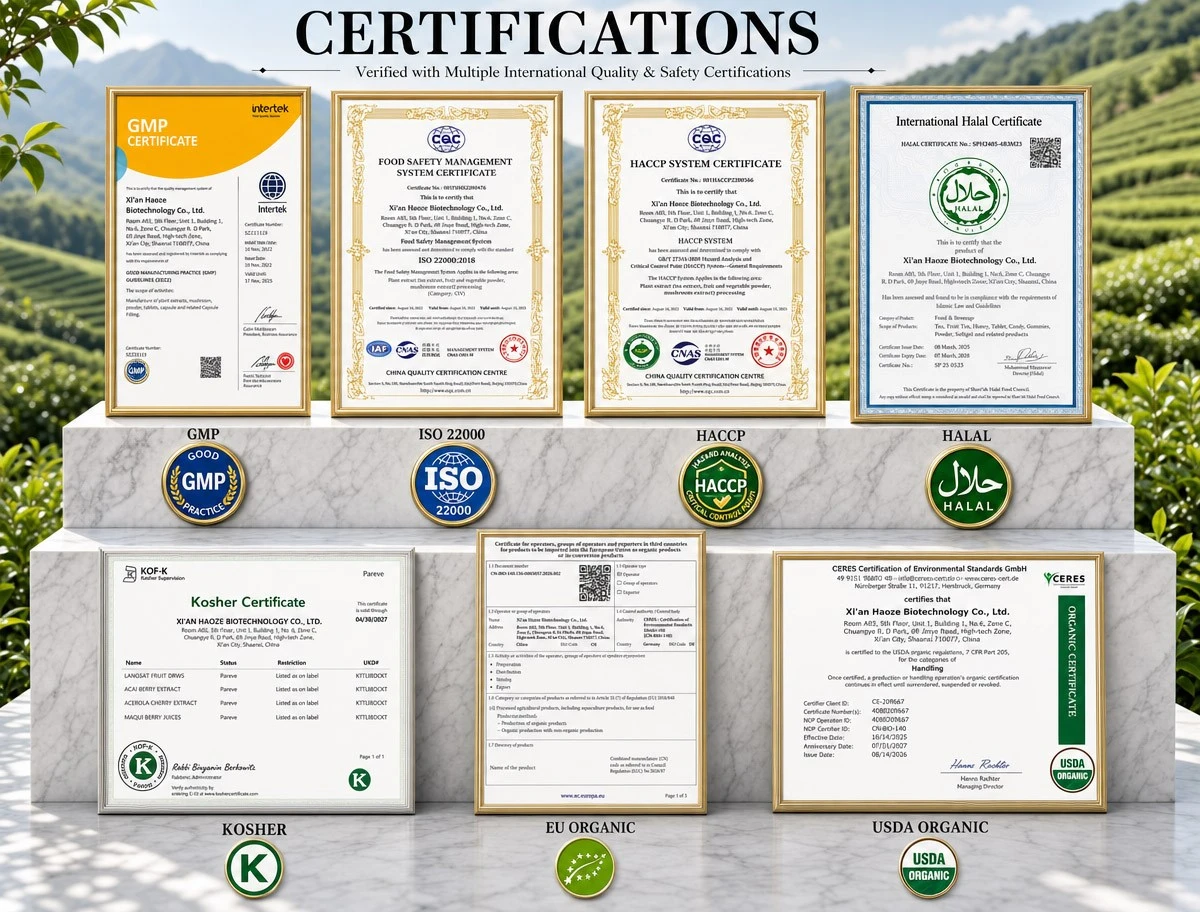
Review certificates for the named site, product scope, issuing body and validity period. A certificate image should not be treated as proof that a specific Reishi lot or grade has been tested or certified. Request current copies relevant to the transaction and destination market.
Packaging and Global Delivery Planning
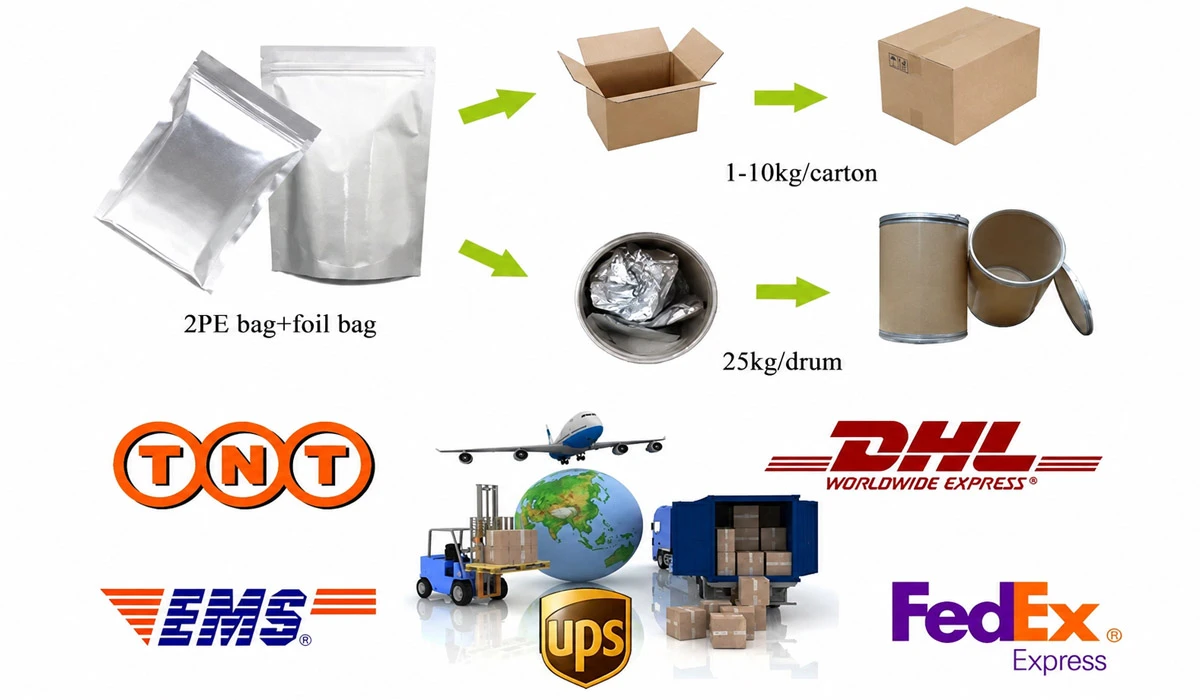
Confirm the actual pack format, inner liner, lot marking and storage instructions for the selected grade. Mushroom extracts may differ in moisture sensitivity and flow depending on their composition and carriers; the buyer should use the item-specific packaging and storage information rather than a generic assumption.
Frequently Asked Questions
Q1: What is the difference between a Reishi water extract and a dual extract?
A: A hot-water extract is designed to recover water-soluble constituents, including polysaccharides. A dual extract combines water extraction with an alcohol extraction step intended to include both water-soluble polysaccharides and alcohol-soluble triterpenoids. The actual marker profile depends on the raw material, process and assay, so compare grade-specific specifications and lot documentation rather than relying on the term "dual extract" alone.
Q2: Why can two Reishi extracts have different bitterness and dispersion?
A: Reishi fruiting-body extracts can differ in bitterness, color and dispersion because extraction conditions affect the mix of soluble polysaccharides and less water-soluble constituents such as triterpenoids. A water extract and a dual extract should therefore be trialed separately in the finished beverage. Record the dose, mixing order, liquid temperature, pH and hold time, then assess taste, cloudiness and any sediment.
Q3: What should buyers compare when reviewing polysaccharide and beta-glucan claims?
A: Ask for the assay method and units for every reported marker. "Total polysaccharides" and beta-glucan are not interchangeable measures. Enzymatic yeast-and-mushroom beta-glucan methods can distinguish beta-glucan from alpha-glucan fractions; the chosen method and the sample matrix should be stated in the specification or lot COA.
Q4: Is Ganoderma lucidum fruiting-body extract considered a novel food in the EU?
A: The European Commission consultation listing dated 10 September 2026 records "Ganoderma lucidum powder extract from the fruiting body" as "Not novel." This conclusion is specific to the consulted ingredient description; it should not be generalized automatically to spores, oils, other species, processes or finished products. Check current destination-market rules, the exact ingredient identity and applicable claims before launch.
Q5: What documents should a bulk buyer request before approving a Reishi grade?
A: Request the current grade specification, a representative lot COA with methods and units, botanical identity and part-used statements, processing and carrier information, and relevant contaminant and microbiology results. For a dual extract, request the stated triterpenoid assay method; for polysaccharide claims, request the assay definition and beta-/alpha-glucan data when available. Match those documents to the quoted grade and intended market.
Discuss Your Reishi Extract Project
Share the desired source part, water-extract or dual-extract route, marker methods, target application and destination market to request a grade-specific specification and sample evaluation. Haoze Bio can discuss technical documentation and bulk sourcing requirements for your Reishi project.
Technical and sourcing inquiries: info@haoze-bio.com